




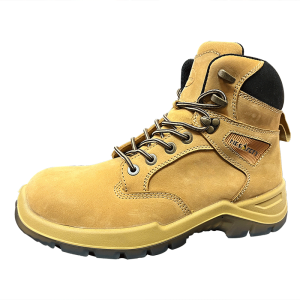
Slip resistance safety shoes are a type of footwear specifically designed for use in the workplace, with the primary purpose of providing additional protection and anti-slip features to reduce the risk of injury to workers on slippery or slippery surfaces.
Such shoes are usually made of wear-resistant materials and have special sole designs that provide better grip and anti-slip properties.
Workplaces often present a variety of potential slip and fall hazards, such as wet floors, grease-contaminated surfaces or uneven floors. These dangerous situations can cause workers to slip, fall or even be seriously injured. Therefore, it is very important to wear slip resistance safety shoes, which can effectively reduce the occurrence of these accidents.
What Makes a Safety Shoe Anti-Slip?
The slip resistance of safety footwear comes primarily from the interaction between the outsole and the walking surface.
Three factors are especially important:
1. Outsole Compound
The composition of the outsole material directly affects slip resistance, but the material name does not equate to slip resistance.
Common materials used for safety shoe outsoles include: rubber, PU (polyurethane), TPU (thermoplastic polyurethane), and composite materials. However, the terms “rubber sole” or “PU sole” alone are insufficient to determine slip resistance—even within the same material category, such as rubber, differences in composition, hardness, and tread pattern can result in vastly different levels of traction.
When purchasing, you should examine the specific formulation, hardness, tread pattern design, and test data, rather than relying solely on the material name.
2. Tread Pattern
The tread forms grooves and contact surfaces between the outsole and the ground, directly affecting slip resistance, water drainage, and walking stability. Key design elements include: tread depth, groove width, tread pattern orientation, contact area, heel design, forefoot design, and drainage channels. When selecting a shoe, it is more important to ensure that the tread pattern is suited to the actual ground conditions and contaminants than to simply consider the material name.
3. Workplace Conditions
The same model of slip resistant safety shoes may perform completely differently on various surfaces: dry concrete, wet tile, oily steel plates, mud, gravel, surfaces with food debris, and smooth industrial floors all have different traction requirements.
The UK Health and Safety Executive (HSE) specifically recommends that buyers consider the actual floor conditions and contaminants present in the workplace when selecting footwear, rather than relying solely on general product descriptions.

Main Types of Slip Resistance Safety Shoes
There is no single universal classification system for every anti-slip safety shoe. For practical purchasing, the following categories are more useful.
1. Rubber Sole Slip Resistance Safety Shoes
When properly formulated, rubber can provide a balance of abrasion resistance, durability, and traction, making it widely used in safety footwear for construction, manufacturing, mining, heavy industry, outdoor work, and industrial maintenance. However, a “rubber sole” does not necessarily guarantee slip resistance—actual performance depends on the rubber formulation, tread pattern, surface conditions, and test results.
Compared to PU or EVA, rubber is generally heavier; nevertheless, in demanding environments where durability is a priority, it remains an important choice for outsole materials. When selecting a model, consider the formulation, tread pattern, and test data, rather than relying solely on the term “rubber.”
For a more detailed comparison of the advantages and disadvantages of rubber safety shoe soles, buyers can review our dedicated guide.
2. PU Sole Slip Resistance Safety Shoes
Polyurethane (PU) is a common material used for the outsoles of safety shoes. It is lightweight, provides good cushioning, offers excellent flexibility, and is comfortable to wear. It performs well in general industrial environments and is commonly used in warehouses, factories, logistics facilities, assembly lines, and general industrial settings. For workers who must walk or stand for long periods, light weight and shock absorption are important factors to consider when selecting footwear.
3. TPU Sole Slip Resistance Safety Shoes
TPU combines durability, abrasion resistance, and excellent structural properties, making it ideal for buyers of safety footwear who seek a balance between durability, flexibility, weight, abrasion resistance, and traction. TPU can also be combined with other materials to create multi-density outsole constructions that offer a balance of support, cushioning, and slip resistance. When selecting a model, don’t just look at the material name; evaluate the overall performance of the shoe based on specific working conditions and test data.
4. Dual-Density and Combination Sole Safety Shoes
This type of safety shoe combines two or more outsole and midsole materials; common configurations include PU/PU, PU/TPU, EVA/rubber, PU/rubber, and EVA/PU. Through dual-density or composite designs, manufacturers can strike a balance between cushioning, weight, durability, flexibility, and traction—for example, by pairing a lightweight cushioning layer with an abrasion-resistant outsole. These shoes are particularly suitable for workers who require long-lasting comfort as well as durable, abrasion-resistant soles.
What Are SRA, SRB and SRC?
SRA, SRB, and SRC are standard slip-resistance ratings used for safety and occupational footwear under European standards (such as EN ISO 20345). They indicate how well a shoe’s sole grips different wet or slippery surfaces during laboratory testing.
The Three Ratings Explained
- SRA: Tested on a ceramic tile floor wetted with a dilute soap (sodium lauryl sulphate) solution. This rating is common for general wet indoor areas or commercial kitchens.
- SRB: Tested on a smooth steel floor wetted with glycerol (which simulates an oily or greasy lubricant). This test is harder to pass because glycerol makes surfaces slicker than soapy water. It is suited for industrial, metalworking, or oily environments.
- SRC: The highest rating, meaning the footwear has passed both the SRA (ceramic/soap) and SRB (steel/glycerol) tests. It offers all-round protection for mixed or hazardous workplaces.

How to Choose the Right Anti-Slip Safety Shoes
When choosing anti-skid safety shoes, in addition to considering their anti-skid level, you should also pay attention to the following points.
Sole material:
Rubber and polyurethane are common sole materials, and they have good anti-slip properties. In addition, some soles are added with special anti-slip materials, such as silicon carbide and natural minerals, to provide better anti-slip effects.
Pattern design:
The pattern design of the sole is also a key factor affecting the anti-skid performance. Deep and dense patterns can increase the friction between the sole and the ground, providing better anti-slip effect.

Comfort:
In addition to anti-slip performance, comfort is also a factor to consider when choosing slip resistance safety shoes. The fit, breathability, and cushioning of shoes all impact workers’ work experience.
To sum up, slip resistance safety shoes are important equipment to protect workers’ safety. They are not merely a compliance requirement but a fundamental defense against one of the most common workplace hazards: slips, trips, and falls. By providing critical traction on slippery or oily surfaces, they significantly reduce the risk of debilitating injuries, lost workdays, and associated costs for both employees and employers.
Frequently Asked Questions About Slip Resistance Safety Shoes
Q1: What is the best sole material for anti-slip safety shoes?
A1: There is no universal best material. Rubber, PU and TPU can all be used in slip-resistant footwear. Performance depends on the formulation, tread design, construction and application.
Q2: What does SR mean on safety shoes?
A2: Under the current EN ISO 20345:2022 framework, SR refers to an additional slip-resistance test. Buyers should verify the exact standard edition and product documentation.
Q3: Are anti-slip safety shoes suitable for oily floors?
A3: Some are, but not every anti-slip shoe is suitable for every oily environment. Buyers should consider both slip resistance and the relevant oil/fuel resistance requirements.
Q4: Can anti-slip safety shoes be customized?
A4: Yes. OEM customization can include outsole material, tread pattern, hardness, upper material, toe protection, midsole, color, sizing, logo and packaging.
Q5: What is the MOQ for slip resistance safety shoes?
A5: Our minimum order quantity (MOQ) for safety boots orders varies depending on the specific style and production process. Standard styles typically require 300 to 500 pairs, while certain specialty styles may have higher minimum order requirements.
Q6: What are the time, costs, and shipping fees for sample production?
A6:
- Production Lead Time: Sample production time depends on product complexity and factory scheduling. Standard safety shoes typically require 7 to 10 days.
- Sample Fees: The first pair of samples is provided free of charge. Additional samples will incur fees, which are refundable upon placing a bulk order.
- Shipping Costs: Customers are responsible for sample shipping fees.
👉 Contact MK Safety Shoes directly for bulk pricing, OEM safety shoes, and sample requests.