




The right chef shoes should provide reliable slip resistance, comfortable support for long shifts, easy cleaning, appropriate protection and a secure fit. The best choice also depends on the kitchen floor, contaminants, working hours and specific job requirements.
Many of our friends work in industries such as catering and hospitality, which have certain dress code requirements. Particularly if you are working in a kitchen, there is often oil, water or detergent on the floor, and at this point you can be a potential slip hazard if you don’t have a suitable pair of chef shoes. So how do you choose a suitable pair of kitchen work shoes?

What features do non-slip chef’s work shoes need to have?
1.Greater slip resistance factor
The difference between non-slip chef work shoes and ordinary shoes is that the sole must increase the friction between the shoe and the ground to ensure that the user can stand firm and not slip even in wet or greasy conditions. Anti-slip chef’s work shoes have a special anti-slip sole with a special pattern that resists slippery surfaces and is designed to help reduce accidents. The deflector grooves in the sole also ensure that water, oil and other substances on the floor are allowed to drain smoothly while the user is wearing them, reducing the chance of slipping.

2.The sole is heat resistant
As kitchen work shoes are often exposed to hot oil, hot water and other high temperature substances, these also add a bit of a safety hazard to the user, so non-slip chef work shoes also need to have a certain degree of heat resistance. Non-slip chef work shoes increase the thickness of the sole to ensure that the chef work shoes have high temperature resistance to prevent hot oil from scalding the toes and causing injury to the user.
3.Lightweight and wear-resistant
There are non-slip chef work shoes with guaranteed quality and more sturdy and durable. There are non-slip chef work shoes that are designed with high quality materials, allowing the user’s feet to be well protected. The branded and reputable chef work shoes manufacturers basically do not cut corners on the materials used, and the high quality chef work shoes have a longer service life than ordinary shoes, ensuring that users get their money’s worth. The quality of some chef’s non-slip work shoes is far above the industry average and will stand the test of time.
Chef Shoes vs Regular Shoes vs Kitchen Safety Shoes
| Feature | Regular Shoes | Chef Shoes | Kitchen Safety Shoes |
|---|---|---|---|
| Slip resistance | Usually limited | Important | Important |
| Long-shift comfort | Depends on model | Designed for work | Designed for work |
| Easy cleaning | Model-dependent | Usually important | Usually important |
| Water resistance | Usually limited | Depends on model | Model-dependent |
| Oil resistance | Usually limited | Model-dependent | Available on selected models |
| Toe protection | Usually unavailable | Model-dependent | Available on selected models |
| Anti-static | Usually unavailable | Model-dependent | Available on selected models |
| Workplace safety focus | Low | Medium–High | High |
Notes on purchasing chef shoes
If you are a catering company or distributor purchasing chef shoes, there are a few points to note.

1.Chef shoes should have a slip resistant inspection report
As chef shoes are a kind of functional shoes, you need to find a chef shoe manufacturer to ask for an anti-slip inspection report to see if the anti-slip meets the national standard. Some chef shoes manufacturers advertise that they can be non-slip and non-skid in oil and water, but those who can’t get the inspection report, at least, do not indicate that they are not particularly formal manufacturers.
2.Try them on in the actual working environment
When purchasing in bulk, you can find a chef shoe manufacturer to take one or two pairs of chef shoes and wear them in the actual working environment. See if they can play a sufficient anti-slip and non-slip effect in the real environment. Any more publicity is better than trying on a pair of chef shoes that are non-slip in the actual working environment.
3.Don’t be greedy for cheap
According to the feedback of many buyers, when purchasing chef shoes, it is easy to be greedy for cheap, resulting in the purchase of chef shoes, wear for a short time, non-slip ability to decline, after-sales service can not keep up, but also have to re-purchase, but spent more time and costs. Individual purchases are fine, but for bulk purchases, while it is important that the chef’s shoes are slip resistant and oil resistant, service is also very important. It is difficult to have a good after-sales service guarantee at a low price.

When choosing non-slip chef work shoes, you should also pay attention to the oil and corrosion resistance and anti-smashing properties. Non-slip chef shoes with oil and corrosion resistant soles are not easy to be decayed and are made of cowhide to increase the breathability, moisture absorption and anti-odour function of the chef shoes. The toe has a built-in steel or plastic toe to prevent knives and heavy objects from hitting the feet, giving the user multiple safeguards.
Some catering company customers, buy non-slip shoes for their chefs because the leather shoes they used before, because the ground environment has oil, acid and alkali, etc., the ordinary shoes are worn and even lose their colour directly. It may be that the soles used before are not professional chef’s anti-slip shoes soles, and the quality is not good, encountering oil, acid and alkali and other corrosive liquids, the soles dissolved. Such shoes, worn by the chef, are unable to achieve sufficient protection.
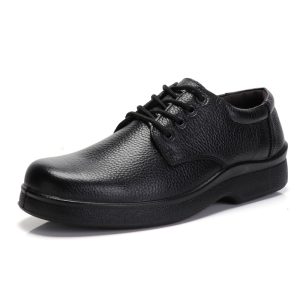
Catering company consulting chef anti-slip shoes
To prevent slipping, it is important to recognize the anti-slip factor of the chef’s shoes and see how much the anti-slip factor of the chef’s shoes can reach. Is there a corresponding inspection report? First of all, the anti-slip coefficient of chef shoes should be able to meet the requirements of the national standard GB21148-2020, and the anti-slip coefficient of chef shoes should be higher in order to cope with more complex workplaces with water, oil and detergents.
The current European standard slip resistance has SRA, SRB and SRC. Chef’s shoes that reach the SRC level of slip resistance can provide sufficient slip resistance to stop slipping in oil, water and detergent floors.
Chef’s non-slip shoes to SRC level
The second is the breathability and comfort of chef shoes, chef shoes are generally worn in the kitchen, the kitchen is also known to be more humid and very hot, a breathable chef shoes can bring the chef a very comfortable experience, after all, one stop is a day, chef shoes breathable and comfortable, for the chef has a great help, so in the choice, breathability is also an important point.
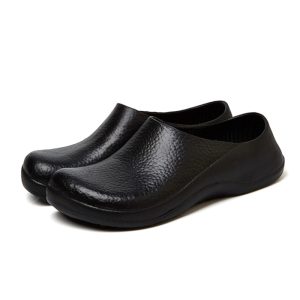
However, because of the special nature of the chef’s working environment, and the need to prevent oil and water spills, it is difficult to use flyweaving or mesh materials, using leather materials to make chef shoes, for chef shoe manufacturers how to do a balance between protection and breathability, there are requirements. The chef’s shoes of poor quality are difficult to guarantee safety and breathability at the same time.
The last thing is the appearance of the chef’s shoes. Nowadays, many kitchens are open to customers who can see the inside of the kitchen through the camera, which can increase the trust of customers. Some chef shoes manufacturers have specialized designers who can customize their own chef shoes according to the needs of the business, and the quality is far beyond the national and European standards, wearing out not only beautiful and generous but also very practical.
Frequently Asked Questions About Chef Shoes
Q1: What makes a good chef shoe?
A1: A good chef shoe should provide a combination of slip resistance, comfort, durability and easy maintenance. For long kitchen shifts, cushioning, fit, flexibility and overall footwear weight can also affect comfort. For commercial kitchens, buyers should additionally consider the upper material, outsole construction, cleaning requirements and any workplace-specific protective features.
Q2: How should chef shoes be cleaned?
A2: Cleaning methods should match the footwear material and manufacturer’s instructions. Remove food debris and contaminants from the upper and outsole regularly, and pay particular attention to the tread because accumulated debris can affect traction. After cleaning, allow the footwear to dry thoroughly before storage or reuse. Keeping both floors and footwear properly maintained is an important part of managing slip risks in kitchens.
Q3: Are slip-on chef shoes better than lace-up shoes?
A3: Neither style is universally better. Slip-on footwear can be convenient in busy kitchen environments, while lace-up designs can provide more adjustable fit and foot retention. The choice should depend on the work process, required fit, workplace rules and user preference.
Q4: Are chef shoes waterproof?
A4: Not all chef shoes are waterproof, but many styles are specifically designed to be waterproof or water-resistant to handle splashes and slippery floors in the kitchen.
Q5: What should I check before buying chef shoes in bulk?
A5: Before placing a large order, buyers should evaluate:
- Slip resistance for the intended floor conditions
- Upper material and ease of cleaning
- Outsole compound and tread design
- Comfort during long shifts
- Water and moisture protection
- Required protective features
- Available sizes
- Durability and expected service conditions
- Applicable standards and testing documentation
- Sample performance in the actual workplace
Looking for Custom Chef Shoes for Your Business?
MKsafetyshoes manufactures kitchen and food work footwear for importers, wholesalers, distributors and OEM buyers. Depending on the application, buyers can discuss outsole construction, upper materials, slip-resistance requirements, protective features, sizing, packaging and product specifications.
👉 Contact MK Safety Shoes directly for bulk pricing, OEM options, and sample requests.