


If you need oil and fuel resistant boots, focus on three things first: outsole material, certifications, and real slip resistance.
- Prefer nitrile rubber or high-quality PU soles for strong oil resistance
- Verify that the product complies with the EN ISO 20345 standard to ensure reliable basic protective performance
- Note that oil resistance and slip resistance are two distinct criteria—they are related but not the same
- For bulk purchases, selecting a reputable safety shoes manufacturer helps ensure consistent and stable product quality
This article provides an in-depth look at everything you need to know about oil and fuel resistant boots, from materials and key safety standards to performance features and considerations for bulk purchasing.
What Are Oil and Fuel Resistant Boots?
Oil and fuel resistant boots are a type of professional safety footwear featuring durable rubber, polyurethane (PU), or thermoplastic polyurethane (TPU) outsoles that resist chemical corrosion and maintain traction on slippery surfaces. These boots prevent oil from damaging the soles and provide excellent traction, making them widely used in industries such as oil and gas, automotive repair, and machinery manufacturing.
These boots are typically part of certified safety footwear wholesale categories and comply with international standards such as EN ISO 20345, which includes requirements for fuel resistance (FO marking).
Why they matter in industrial settings:
- Oil spills are common
- Surfaces become dangerously slippery
- Chemical exposure can damage standard footwear
Without proper oil and fuel resistant boots, workers face higher risks of slips, falls, and long-term equipment failure.

Materials Behind Oil and Fuel Resistant Boots
The materials used in oil and fuel resistant boots play a critical role in their performance, durability, and safety. To ensure that the outsole does not swell, age, or become slippery after prolonged exposure to oil, these boots are typically made from specialized materials such as nitrile rubber, thermoplastic polyurethane (TPU), or specially formulated polyurethane (PU). These materials form a non-porous barrier that effectively blocks hydrocarbons and are usually combined with durable, treated leather uppers to provide maximum protection.
Nitrile Rubber (Premium Choice)
Nitrile rubber offers exceptional resistance to oil, fuel, and heat (up to 300°C) and is widely used in the manufacture of safety shoes for extreme industrial environments. As one of the core materials in high-performance protective footwear, it is commonly used in professional safety shoes factory for the production of oil and fuel resistant boots.
Thermoplastic Polyurethane (TPU)
Thermoplastic polyurethane is a modern, high-performance synthetic material widely recognized for its excellent abrasion resistance and flexibility; it is particularly well-suited for providing stable traction on smooth surfaces.
PU (Polyurethane)
Polyurethane (PU) is commonly used in dual-density sole designs, offering both excellent shock absorption and comfort, while also providing superior resistance to oil and chemical corrosion when formulated with special additives.
Rubber
Rubber soles offer excellent traction on slippery surfaces and provide reliable slip resistance, making them particularly suitable for greasy or damp work environments.
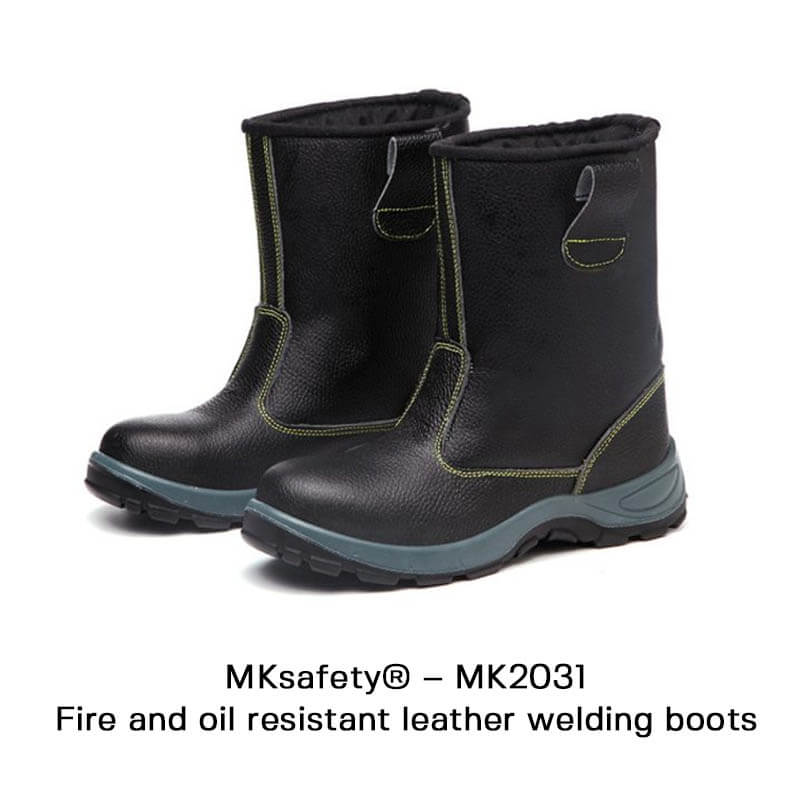
Key Safety Standards for Oil and Fuel Resistant Boots
Oil and fuel resistant boots must meet key standards such as EN ISO 20345 (Europe) or ASTM F2413 (U.S.) to ensure their protective performance in harsh environments.
1. EN ISO 20345
The EN ISO 20345 standard is one of the most widely recognized and followed standards in the field of safety footwear. It specifies the basic safety performance requirements for oil and fuel resistant boots, including:
- Impact-resistant toe caps
- Slip resistance
- Fuel oil resistance (FO marking)
Boots meeting this standard ensure reliable protection in oil-exposed environments.
2. ASTM F2413 (USA)
For workplaces in North America, ASTM F2413 is the core standard for evaluating the safety performance of protective footwear. This standard clearly specifies performance requirements for impact resistance, compression resistance, chemical resistance, and electrical shock protection.
Partnering with a trusted safety shoes manufacturer is essential to ensuring that oil and fuel resistant boots meet relevant international standards. Professional manufacturers typically have robust quality control systems and compliance certifications in place, providing more reliable quality assurance for bulk purchases.
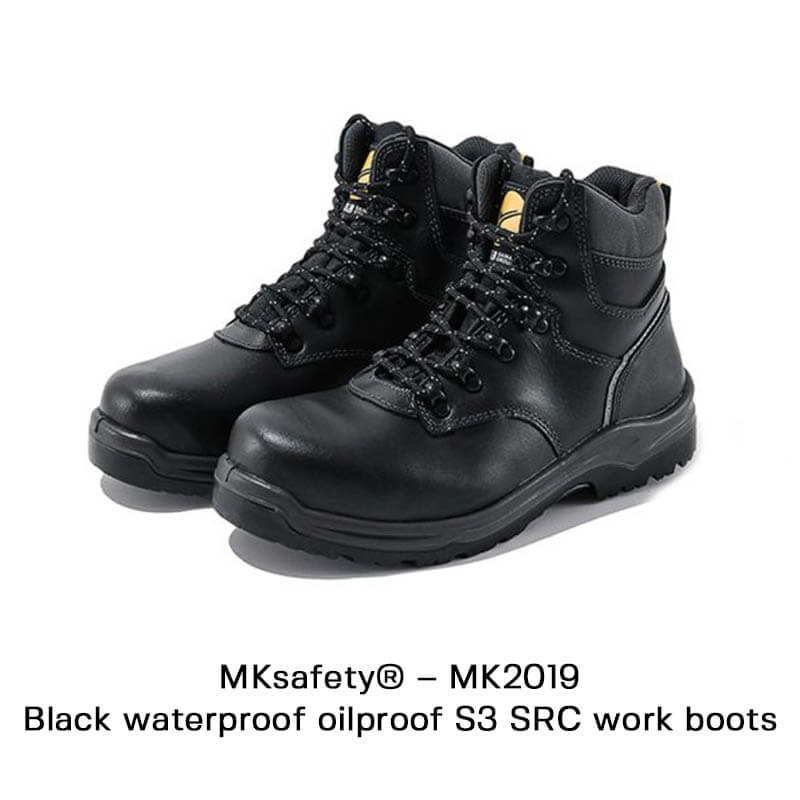
Performance Features of Oil and Fuel Resistant Boots
Oil and fuel resistant boots are specifically designed for high-risk work environments where oils, chemicals, and acidic substances are present. Their outsoles are typically made of special materials such as nitrile rubber or TPU to effectively resist corrosion from aggressive substances. A high-quality pair of oil and fuel resistant boots typically offers the following key features.
Oil-Resistant Outsoles
The soles are made from high-performance materials such as nitrile rubber, which resist swelling, softening, or cracking when exposed to grease, oils, and chemicals, thereby ensuring the shoes’ long-term durability in harsh environments.
Slip Resistance
Oil and fuel resistant boots typically feature SRC-rated slip-resistant outsoles with wide, multi-directional tread patterns that help quickly drain liquids, ensuring excellent traction and stability on wet or oily surfaces.
Safety Toes and Protection
Oil and fuel resistant boots are typically equipped with steel, aluminum, or composite toe caps, providing reliable protection against impact and compression (such as withstanding an impact force of 200 joules), and are a key design feature for safeguarding against the risks of falling heavy objects and crushing.
Comfort and Durability
High-quality oil and fuel resistant boots typically feature full-grain leather uppers and sturdy construction methods, such as Goodyear welting or direct stitching, enabling them to withstand the rigors of harsh working environments without easily wearing out.

Oil Resistant vs Slip Resistant Boots
Although oil-resistant boots and slip-resistant boots are both essential for preventing workplace accidents, there are significant differences in their functional design and intended applications:
- Oil-resistant boots: The primary focus is on protecting the sole material from corrosion caused by oils, lubricants, and chemicals in industrial environments, preventing degradation, swelling, or damage. These boots are commonly used in industries with high risks of oil contamination, such as petrochemicals, machinery manufacturing, and automotive repair.
- Anti-slip boots: These primarily rely on specialized sole tread patterns and rubber formulations to enhance traction on wet, smooth, or slippery surfaces, effectively preventing slip-and-fall accidents. They are widely used in kitchens, restaurants, hospitals, and cleaning services—environments where slip resistance is a top priority.
For workers in industries such as oil drilling, chemical manufacturing, and construction, oil and fuel resistant boots typically combine oil resistance, corrosion resistance, and slip-resistant traction, enabling them to handle challenging work environments and providing more comprehensive foot protection.
Bulk Buying Guide for Oil and Fuel Resistant Boots
When purchasing oil and fuel resistant boots in bulk, we recommend prioritizing nitrile rubber slip-resistant outsoles with FO-grade certification and ensuring that the products comply with international safety standards such as S3 or ASTM F2413 to achieve more comprehensive and reliable protection.
Checklist for Bulk Procurement:
- Verify Standards: Ensure that the shoe label bears the complete code (e.g., FO, HRO, S3).
- Size Range: Order shoes with a wide size range (e.g., EU 37–47) to accommodate the needs of employees with different foot sizes.
- Specific Hazards: If workers are working near live electrical circuits, select boots with an Electrical Hazard (EH) rating.
- Durability Assessment: Prioritize shoes with high-density outsoles to extend the boots’ service life.
MKsafety shoes is a professional safety shoes manufacturer in China with years of experience serving global B2B clients.
We offer:
- ✔ High-quality products from a certified safety footwear manufacturer
- ✔ Highly competitive prices through safety shoes wholesale and distribution
- ✔ Full OEM/ODM support for customized safety shoes
- ✔ Strict quality control from our own safety shoes factory
- ✔ Fast production and global shipping
Whether you need oil and fuel resistant boots, industrial safety shoes, or customized solutions for your brand, we are ready to support your business.
👉 Contact MKsafetyshoes today for a free quote, samples, and expert advice tailored to your industry.
FAQs About Oil and Fuel Resistant Boots
Q1: What is the best material for oil resistance?
A1: Nitrile rubber (NBR) offers the best performance for oil and fuel resistant boots, especially in heavy-duty environments.
Q2: What does FO mean in safety footwear?
A2: The “FO” in safety shoes stands for “fuel oil resistant,” indicating that the sole is specially designed to resist wear and maintain its integrity even when exposed to hydrocarbons such as fuel, gasoline, and motor oil.
Q3: What is the MOQ for oil and fuel resistant boots?
A3: Our minimum order quantity (MOQ) varies depending on the specific style and production process. Standard styles typically require 300 to 500 pairs, while certain specialty styles may have higher minimum order requirements.
Q4: How long does it take to oil and fuel resistant boots?
A4: Production typically takes 30-45 days, with the exact duration subject to variation based on order complexity and quantity.
Q5: What are the time, costs, and shipping fees for sample production?
A5:
- Production Lead Time: Sample production time depends on product complexity and factory scheduling. Standard safety shoes typically require 7 to 10 days.
- Sample Fees: The first pair of samples is provided free of charge. Additional samples will incur fees, which are refundable upon placing a bulk order.
- Shipping Costs: Customers are responsible for sample shipping fees.
Q6: What does the after-sales service for oil and fuel resistant boots include?
A6: We provide the following services:
- Free replacement for non-human-induced damage within the warranty period.
- Professional product usage guidance, including cleaning and daily maintenance advice.
- For bulk orders, we offer comprehensive order tracking services.