


Oil & Gas environments are among the most dangerous workplaces in the world, requiring reliable personal protective equipment to ensure worker safety. Among these essential protections, oil field boots play a critical role in preventing injuries and improving comfort during long working hours.
| Product Name | Features & Performance | Target Users |
|---|---|---|
| MK1030 – Waterproof Oil Field Boots | Fully waterproof design, cold-bonded rubber outsole, split cow leather upper, high abrasion resistance, steel toe + steel puncture-resistant midsole | Offshore oil workers, wet environment operators, outdoor field technicians in rainy regions |
| MK2019 – S3 Oilproof SRC Work Boots | Anti-static protection, oil-resistant SRC outsole, injection-molded PU sole, split cow leather upper, steel toe cap + steel midsole, S3 certified protection | Petrochemical workers, refinery staff, gas and flammable environment operators |
| MK2031 – Fire & Oil Resistant Welding Boots | HRO heat-resistant outsole, high-temperature resistance, injection PU structure, durable split cow leather, steel toe + steel midsole protection | Welding workers, foundry workers, oilfield high-heat maintenance staff |
| MK2032 – Cold Weather Oil Field Boots | Thermal insulation lining, cold-resistant PU outsole, lightweight insulation design, split cow leather upper, steel toe + steel midsole | Workers in cold regions (North America, Russia, Northern Europe), outdoor winter industrial laborers |
👉Contact us if you wish to obtain more safety shoes styles!
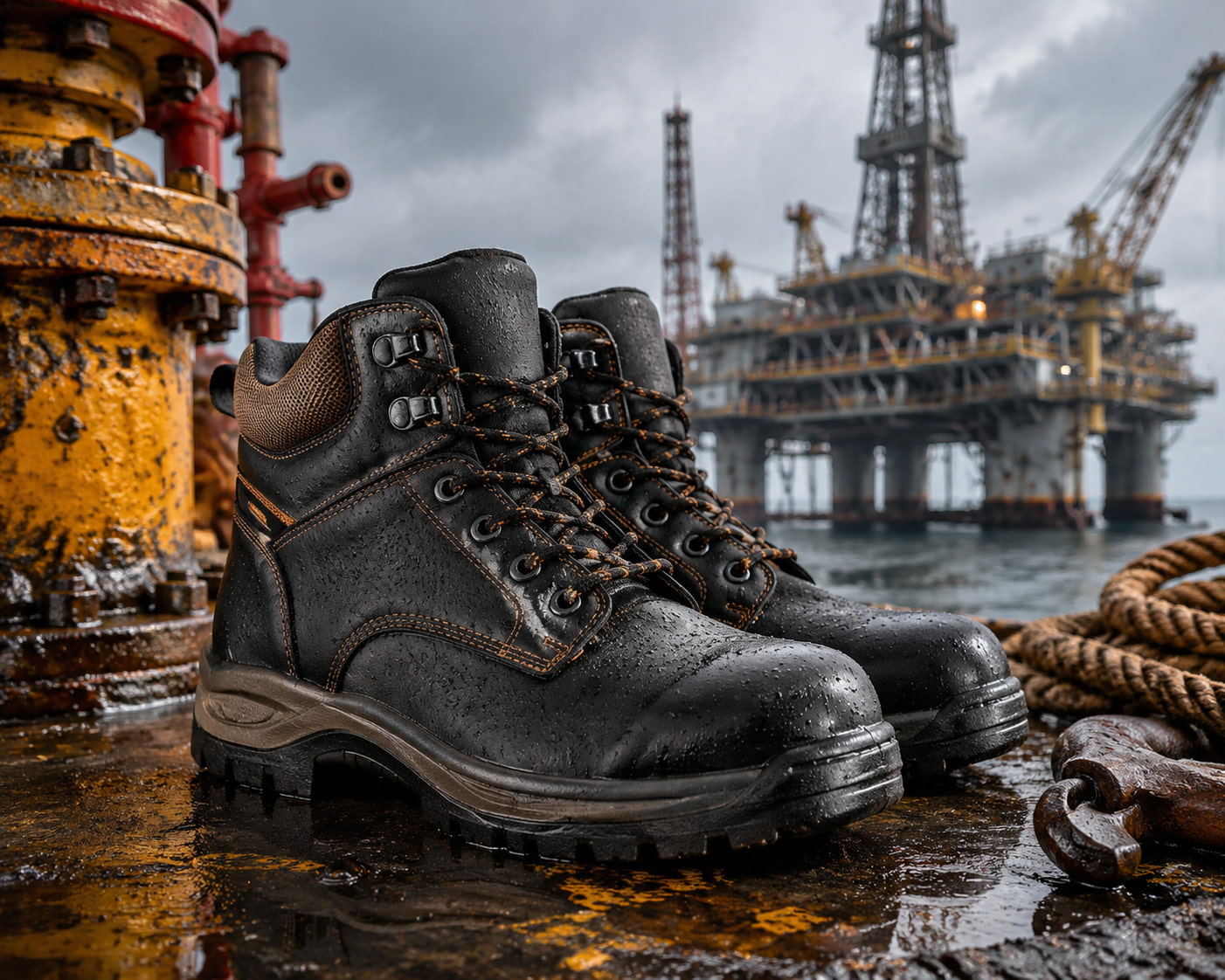
What Are oil field boots?
Oil field boots are specialized safety footwear designed for workers operating in oil drilling sites, refineries, gas extraction fields, and petrochemical environments. Unlike regular work shoes, oil field safety boots are built to withstand extreme conditions such as oil exposure, slippery surfaces, heavy machinery risks, and harsh weather.
The main purpose of oil field safety boots is to provide comprehensive foot protection while ensuring stability and durability in high-risk industrial environments.
Key Features of oil field boots
High-quality oil field boots are engineered with multiple protective and performance features:
- Slip-resistant outsoles for oily and wet surfaces
- Oil-resistant and chemical-resistant materials
- Steel toe or composite toe protection
- Puncture-resistant midsoles (often Kevlar or steel plate)
- Waterproof or water-repellent upper construction
- Shock absorption for long working hours
- Heat and abrasion resistance in extreme environments
These features make oil field safety boots essential for workers who face daily exposure to hazardous conditions.
What Are oil field boots Used For?
Oil field boots are widely used in industries where safety risks are high and environmental conditions are challenging, including:
- Oil drilling platforms (onshore and offshore)
- Petroleum refining plants
- Natural gas extraction sites
- Pipeline construction and maintenance
- Heavy industrial manufacturing related to energy production
Workers such as drill operators, refinery technicians, maintenance engineers, and field inspectors rely heavily on oil field safety boots for daily protection.
Why Choose oil field boots?

Choosing the right oil field safety boots is essential for safety and productivity. These boots are designed not only for protection but also for long-term comfort and performance.
Key reasons to choose oil field safety boots include:
- Reduced workplace injury risk
- Enhanced grip in slippery oil environments
- Long-lasting durability under harsh conditions
- Improved comfort during long shifts
- Compliance with international safety standards
For companies operating in the oil and gas sector, investing in high-quality oil field safety boots directly improves worker safety and operational efficiency.
Advantages of oil field boots
The advantages of oil field safety boots go beyond basic protection:
- Maximum Safety Protection– Toe protection and puncture resistance reduce accident risks
- Enhanced Stability– Anti-slip soles improve balance in oily environments
- Durability– Designed for heavy-duty industrial use
- All-Day Comfort– Cushioned insoles reduce fatigue during long shifts
- Weather Resistance– Suitable for extreme heat, cold, and humidity
- Chemical Resistance– Protects against oil, fuel, and industrial chemicals
These advantages make oil field safety boots a necessity rather than an option in oilfield environments.
Materials Used in High-Quality oil field boots
Premium oil field safety boots are manufactured using advanced materials to ensure performance and safety:
- Full-grain leather or microfiber leather uppers
- PU or rubber dual-density outsoles for grip and durability
- Kevlar or steel midsole for puncture resistance
- Composite or steel toe caps for impact protection
- Waterproof membrane layers for moisture protection
- Oil-resistant rubber compounds for outsole stability
These materials ensure that oil field boots perform reliably under extreme working conditions.
Oil Field Boots vs Regular Safety Shoes

| Feature | Oil Field Boots | Regular Safety Shoes |
|---|---|---|
| Protection Level | Offer higher resistance to oil, chemicals, and slipping | Designed for general hazards, limited oil and chemical resistance |
| Durability | Built for extreme industrial environments, not general construction | Suitable for general industries and light-to-medium duty use |
| Outsole Design | Specialized oil-resistant anti-slip patterns for wet, oily, and slippery surfaces | Standard anti-slip soles, not specifically designed for oil environments |
| Upper Height | Usually higher for enhanced ankle support and protection | Usually low-cut or mid-cut design with limited ankle support |
| Material Strength | Enhanced chemical and abrasion resistance materials | Standard materials suitable for general work conditions |
Safety Standards for oil field boots
To ensure worker protection, oil field safety boots must comply with international safety standards such as:
- EN ISO 20345 (European safety footwear standard)
- ASTM F2413 (American safety footwear standard)
- Oil and slip resistance (SRC/SR ratings)
- Anti-static (ESD) requirements in some environments
- Impact and compression resistance certifications
Compliance with these standards ensures that oil field safety boots meet strict safety and performance requirements worldwide.
Where Are oil field boots Commonly Used?
Oil field boots are widely used in countries with strong oil and gas industries, including:
- United States (Texas, Alaska offshore platforms)
- Canada (oil sands and energy fields)
- Saudi Arabia and Middle Eastern countries
- United Arab Emirates (UAE energy sector)
- Nigeria and other African oil-producing regions
- Russia and Central Asia
- South American oil extraction zones
In all these regions, oil field safety boots are considered essential PPE for industrial workers.
Are oil field boots Comfortable?
Modern oil field safety boots are designed with both protection and comfort in mind. Features such as ergonomic insoles, breathable lining materials, shock-absorbing midsoles, and lightweight composite toes significantly improve comfort levels.
This allows workers to wear oil field safety boots for long shifts without excessive foot fatigue, which is especially important in 10–12 hour industrial work environments.
MK Safety Shoes – Professional oil field boots Manufacturer
MK Safety Shoes is a professional safety shoes manufacturer in china, specializing in the design, development, and production of high-quality industrial footwear, including oil field safety boots.
With over 10 years of manufacturing experience, MK Safety Shoes has provided foot protection solutions for millions of workers worldwide.
Our advantages include:
- OEM & ODM customization services
- Wholesale and bulk supply capability
- Private label and branding support
- Strict quality control systems
- Export experience across multiple international markets
- Ability to meet different safety shoes standards (EN ISO, ASTM, CE, etc.)
As a trusted supplier, MK Safety Shoes ensures that every pair of oil field safety boots delivers durability, safety, and comfort for demanding industrial environments.
Summary
In high-risk oil and gas environments, choosing the right footwear is critical. oil field safety boots provide essential protection against slips, impacts, chemicals, and harsh working conditions while ensuring comfort and durability for long shifts.
With advanced materials, strict safety standards, and specialized design, oil field safety boots are indispensable for modern energy industry workers.
👉Contact us to help you select a trustworthy safety shoes factory!
MK1030—Waterproof Oil Field Boots

- Fully waterproof structure designed for wet and rainy environments
- Suitable for offshore platforms and oilfield wet working conditions
- Cold-bonded construction with rubber outsole for durability and grip
- Upper made of split cow leather for high abrasion and tear resistance
- Steel toe cap + steel puncture-resistant sole for dual protection
MK2019—S3 oilproof SRC work boots

- Anti-static design effectively releases human static electricity
- Suitable for flammable gas and petrochemical environments
- Injection-molded PU outsole, lightweight and stable
- Split cow leather upper with steel toe protection
- Steel midsole for puncture resistance, meeting S3 safety standard
MK2031—Fire and oil resistant leather welding boots

- HRO heat-resistant rubber or outsole designed for high-temperature environments
- Suitable for oilfield equipment areas and high-heat workplaces
- Injection-molded PU construction for structural stability
- Split cow leather upper for enhanced durability
- Steel toe cap + steel midsole for basic protection and puncture resistance
MK2032—Cold Weather Oil Field Boots

- Thermal lining for cold and extreme low-temperature environments
- Suitable for North America, Russia, and other cold regions
- Injection-molded PU outsole with good insulation and lightweight performance
- Split cow leather upper for flexibility and comfort
- Steel toe cap + steel midsole for safety protection
For global buyers seeking reliable supply, MK Safety Shoes offers professional manufacturing solutions and customized safety shoes to meet diverse industrial needs.
👉Contact us to know the details of oil field boots!
FAQ about custom oil field boots
Q1: What is the process for custom safety shoes?
A1: We are MK safety shoes. The customization process typically begins with requirement communication. Please provide us with your specific requirements.
Q2: How long does it take to custom safety shoes?
A2: Customization typically takes 30-45 days, depending on order complexity and quantity. Special processes or materials may require additional time. We will confirm the final delivery date with you.
Q3: What is the MOQ for custom safety shoes?
A3: Our MOQ varies by product style and manufacturing process. Standard styles require 500-1000 pairs, while certain special styles may have higher minimum orders.
Q4: Are oil field boots waterproof?
A4: Most high-quality oil field boots are water-resistant or fully waterproof, depending on the design. This helps workers stay protected in wet, muddy, and offshore conditions.
Q5: Who needs oil field boots?
A5: Oil field boots are mainly used by oil rig workers, refinery technicians, pipeline workers, drilling engineers, and maintenance staff working in oil & gas environments.
Q6: Are oil field boots comfortable for long hours?
A6: Yes. Modern oil field boots are designed with ergonomic insoles, shock-absorbing midsoles, and breathable lining to reduce fatigue during long shifts.
Q7: What safety standards do oil field boots follow?
A7: High-quality oil field boots usually comply with EN ISO 20345, ASTM F2413, and other international safety standards, ensuring protection against impact, puncture, and slip risks.
Q8: Can oil field boots be customized?
A8: Yes. At MK Safety Shoes, we offer OEM & ODM customization for oil field boots, including materials, logos, colors, packaging, and safety certifications based on different market requirements.
Oil field boots face daily oil, mud and chemical exposure, so a consistent cleaning and conditioning routine is what keeps the leather, stitching and soles protective. See our guide to maintenance and cleaning tips for safety shoes to extend the life of every pair.